One Video, Every Platform: How Creators Are Using AI to Auto-Format Content for TikTok, Reels, Shorts and YouTube
The same video doesn't work the same way on four different platforms. AI is closing that gap without the creator re-editing it four separate times.
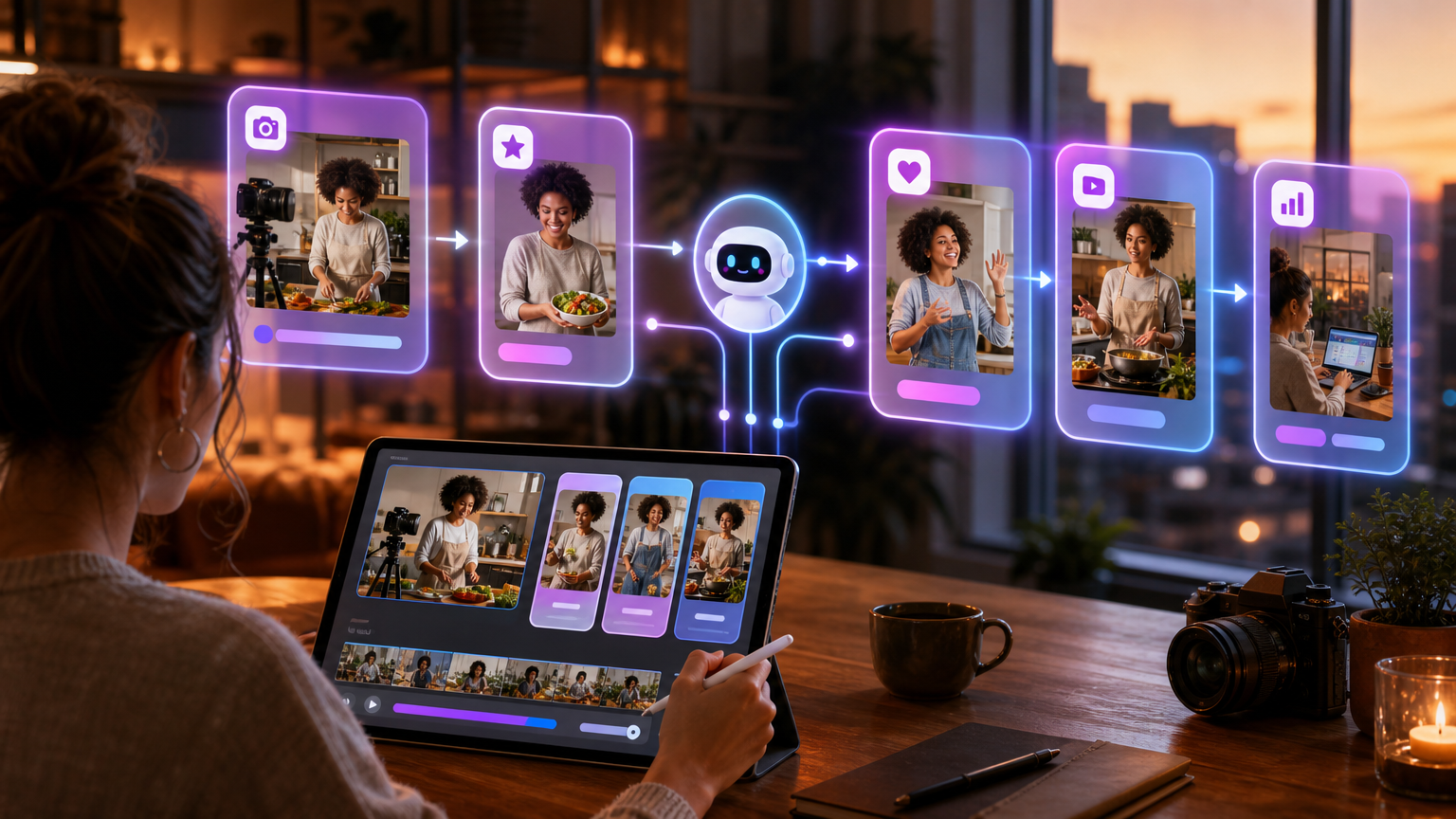
Creators are expected to show up natively on TikTok, Instagram Reels, YouTube Shorts, and long-form YouTube with the same piece of content, but each platform has different aspect ratios, caption styles, and ideal lengths — AI tools now handle that reformatting automatically instead of requiring a separate manual edit for each platform.
Every creator who's tried to post the same video everywhere knows the friction isn't the idea or even the filming — it's what happens after. A 16:9 YouTube video doesn't just drop into TikTok's 9:16 feed. The caption style that works on Reels looks off on Shorts. The hook that needs three seconds on TikTok needs to land in one second on Shorts because of how differently each platform's algorithm rewards early retention.
That reformatting work used to mean either picking one platform to prioritize and neglecting the others, or spending hours re-cutting the same footage four different ways. AI-powered editing tools are removing that trade-off by handling the platform-specific reformatting automatically — different crops, caption placement, pacing, and length — from a single piece of source footage.
What Actually Changes Between Platforms (And Why It Matters)
It's not just aspect ratio. TikTok rewards fast hooks and native-feeling editing; YouTube Shorts has its own pacing preferences and a slightly different algorithm for what gets pushed to the For You-equivalent feed; Instagram Reels audiences respond differently to on-screen text density than TikTok audiences do; and long-form YouTube rewards a completely different structure built around watch-time retention rather than a single hook.
A creator trying to manually account for all of that on every single video is doing four jobs instead of one. AI tools that understand these platform-specific patterns can generate the reformatted versions automatically, so the creator's time goes into the parts that actually require a human — the idea, the performance, the final review — not the repetitive technical reformatting.
- Automatic reformatting of one piece of footage into the correct aspect ratio and crop for TikTok, Reels, Shorts, and long-form YouTube, instead of manually re-editing four times
- Platform-appropriate caption styling and placement generated for each version, since what reads well on one platform often looks cluttered or sparse on another
- Hook and pacing adjustments tailored to each platform's retention patterns, since the first one to three seconds carry different weight on each one
- A publishing workflow that turns one day of filming into a week or more of platform-native content instead of a single post
- More time freed up for the creative and performance side of content, since the repetitive technical reformatting is handled automatically
Creators who post consistently across more than one short-form platform generally see higher total reach than those concentrated on a single platform, according to Hootsuite's creator and influencer trend research — a pattern that's only sustainable at scale if the reformatting work doesn't multiply the creator's workload by platform count.
Why This Matters More Now Than It Did a Year Ago
The expectation to be multi-platform has only gotten stronger. Audiences increasingly discover creators on whichever platform they already spend the most time on, which means a creator who only posts natively to one platform is leaving a meaningful chunk of potential reach on the table — not because the content isn't good, but because it was never formatted for the places those other audiences actually are.
At the same time, the pressure to post more often hasn't eased up. AI-assisted multi-platform distribution is one of the few ways a solo creator or small team can meet both of those pressures — more platforms, more consistency — without the production workload growing at the same rate.
“The video doesn't need to be filmed four times — it just needs to be formatted four ways.”
Where This Fits Into a Creator's Actual Workflow
The creators getting the most out of this aren't changing how they film — they're changing what happens after the camera stops. One recording session becomes the source material, and the platform-specific versions get generated and queued for publishing without a separate editing pass for each one.
Kaiman Studio is built around exactly this kind of workflow: one subscription that turns a single piece of content into platform-native versions across the places a creator's audience actually shows up, so going multi-platform doesn't mean quadrupling the production effort. Read more on content batching and repurposing on alertaaccess.com for creators looking to pair this with a broader production workflow.

One piece of footage, four platform-native versions — formatted automatically, not re-edited manually.
Frequently asked questions
Does AI reformatting actually understand what works differently on each platform?
Yes — tools built for this are trained on the specific pacing, caption, and framing patterns that perform on each platform, rather than applying one generic edit to every version.
Do I need separate footage for each platform?
No — the point is the opposite. One recording session becomes the source material, and the platform-specific versions (aspect ratio, captions, pacing) are generated from that single piece of footage.
Is this only useful for creators who already have a large audience?
It's actually most valuable for smaller creators and solo operators, since they're the ones without a team to handle manual reformatting for every platform — this is what lets one person realistically maintain a multi-platform presence.