Why Schools Are Using AI for Alumni Engagement, Not Just Admissions
Admissions gets all the marketing budget. Alumni relations gets whatever's left over. AI is starting to even that out.
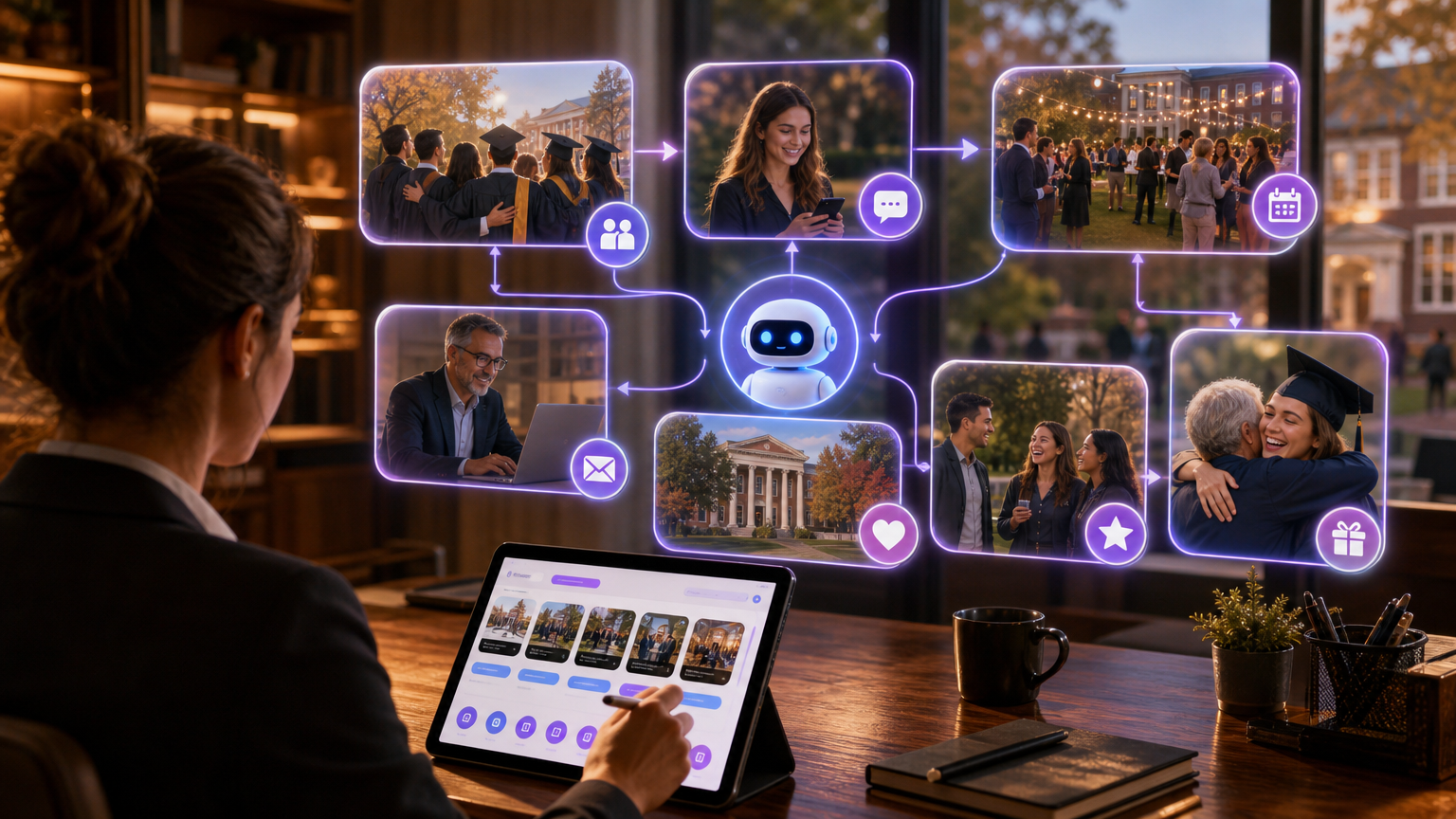
Alumni relations and advancement offices are usually the smallest team at a school with the biggest list to manage, and AI-generated content is letting them run the kind of consistent, personalized outreach that used to require a much larger staff.
Every school's marketing energy gravitates toward admissions — the open houses, the campaign videos, the social content aimed at prospective students and their families. It makes sense: enrollment is the number everyone watches. But alumni relations and advancement offices are sitting on an asset that's arguably just as valuable — a list of people who already chose the institution once and, with the right ongoing relationship, are far more likely to give, volunteer, or send the next generation of students.
The problem has never been the strategy. Advancement teams know they should be segmenting alumni by graduation year, major, and giving history, and sending each group something relevant. The problem is capacity — a two- or three-person advancement office can't realistically write a dozen different versions of a fall appeal, a homecoming invitation, and a year-end giving campaign on top of everything else on their plate.
What AI Actually Changes for a Small Advancement Office
AI content tools let a lean advancement team produce the volume and variety that used to require a much bigger staff or an outside agency. Instead of one generic alumni newsletter, a school can generate a dozen versions — one for recent graduates, one for 25-year reunion classes, one for lapsed donors — each written in a tone and with references that fit that group, without multiplying the staff time required.
This matters most during the moments that drive the majority of annual giving: homecoming, year-end appeals, and giving-day campaigns. Those are exactly the weeks when an advancement office needs the most content output and has the least bandwidth to produce it by hand.
- Segmented email and social appeals drafted for different alumni cohorts (recent grads, milestone reunion classes, major-specific groups) without writing each one from scratch
- Year-end giving campaign content — the single highest-stakes stretch for most advancement offices — built and scheduled weeks in advance instead of assembled in a last-minute scramble
- Homecoming and reunion event promotion content tailored by class year and interest, not a single mass email to the entire alumni list
- Donor impact stories and gratitude content drafted quickly enough to actually send after a gift comes in, not months later
- Social content for the school's alumni-facing channels that stays consistent in voice even when the content volume increases
Fundraising Content Is Also Trust-Building Content
There's a reason alumni engagement and fundraising content deserve more attention than they usually get: donors give to institutions they feel connected to, not ones that only reach out when asking for money. A steady cadence of genuinely interesting alumni content — career spotlights, campus updates, student impact stories — builds the relationship that makes the eventual ask land differently.
An advancement office using AI to generate this content isn't cutting corners on the relationship — it's making the relationship possible at a scale that a small team could never sustain by hand. The institution's voice and values stay consistent because the team is reviewing and approving everything; the AI just removes the bottleneck of writing every single version from a blank page.
“Alumni don't give because they were asked once well — they give because the relationship never went quiet.”
Getting Started Without Overhauling the Advancement Office
Schools don't need to restructure their advancement team to start using AI content tools — most start with the single highest-pressure moment on the calendar, usually the year-end giving campaign or homecoming, and build out from there once the team sees how much time it frees up.
Platforms like Kaiman Studio are built for exactly this kind of lean team: one subscription covering email, social, and campaign content generation, so a two-person advancement office can run the kind of segmented, consistent outreach that used to require a much bigger budget — a gap that's become more pressing as higher-ed advancement teams report flat or shrinking staff sizes relative to the alumni base they're asked to engage.
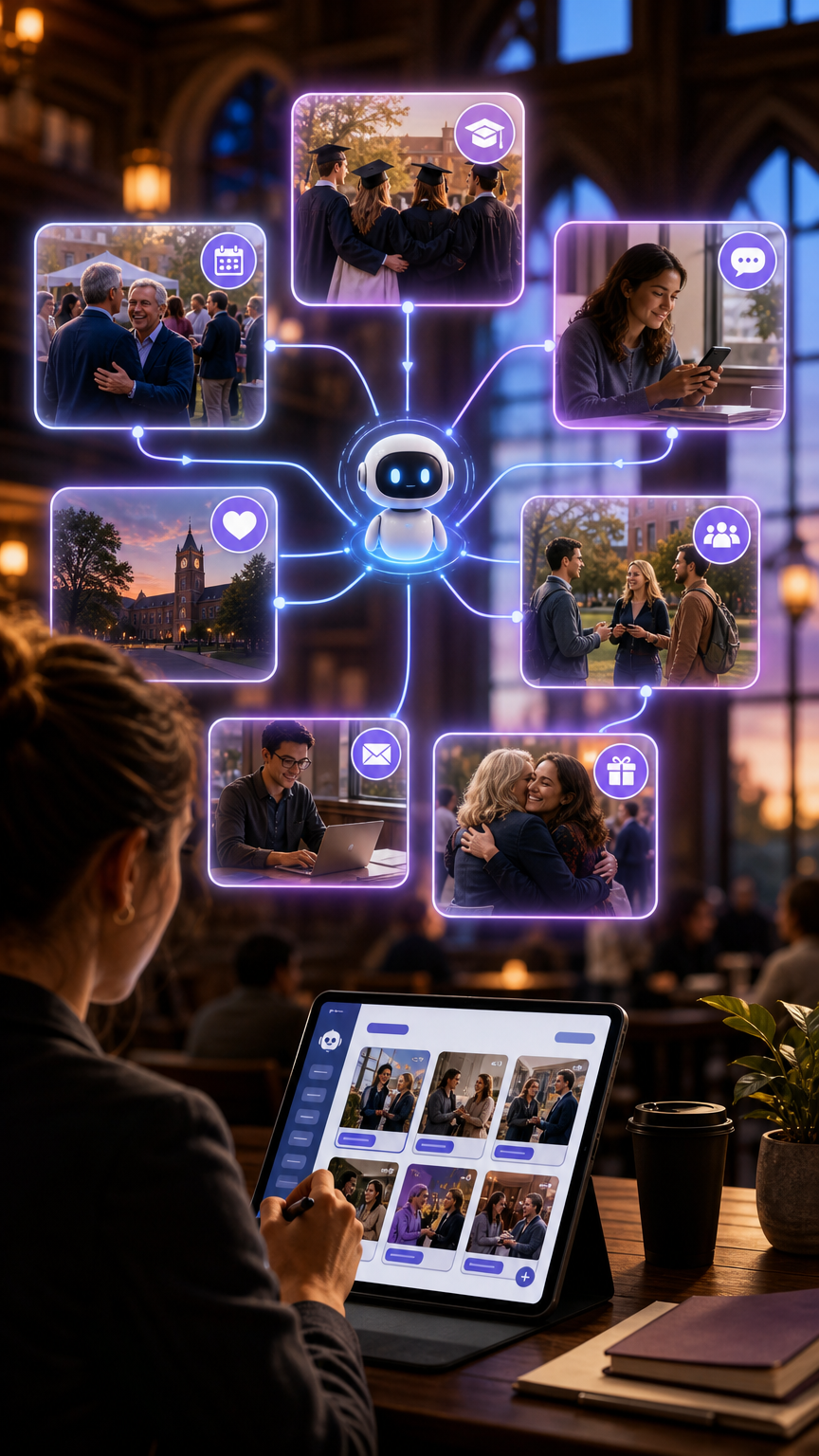
Every alumnus is a node in the network — AI just makes it possible to reach all of them.
Frequently asked questions
Can AI write fundraising appeals that still sound like the school, not a generic template?
Yes — tools like Kaiman Studio are set up with the institution's own voice and past content as a reference point, so the output stays in character rather than reading like a generic nonprofit template.
Is this only useful for large advancement offices?
It's actually most useful for small ones — a one- or two-person team gets the most benefit from AI-generated content because it removes the bottleneck of writing every segmented version by hand.
What's the best place for a school to start?
Most start with their single biggest annual moment — usually the year-end giving campaign or homecoming — since that's where the content gap is most painful and the payoff from fixing it is most visible.